
Programmes
What atmosphere would you like to create?
From a calm welcome to music everyone can enjoy together, tell us the atmosphere you have in mind. These programmes are a starting point: we adapt repertoire and ensembles to your purpose, space and budget.
Programmes
Classical ensemble
A calm performance for welcome receptions and formal dinners. We suggest acoustic instruments such as strings and piano, with repertoire and an ensemble suited to your venue and running order.
- When you want this mood
- A calm welcome or formal dinner
- What we decide together
- Room size and reverberation, number of musicians and availability of a piano
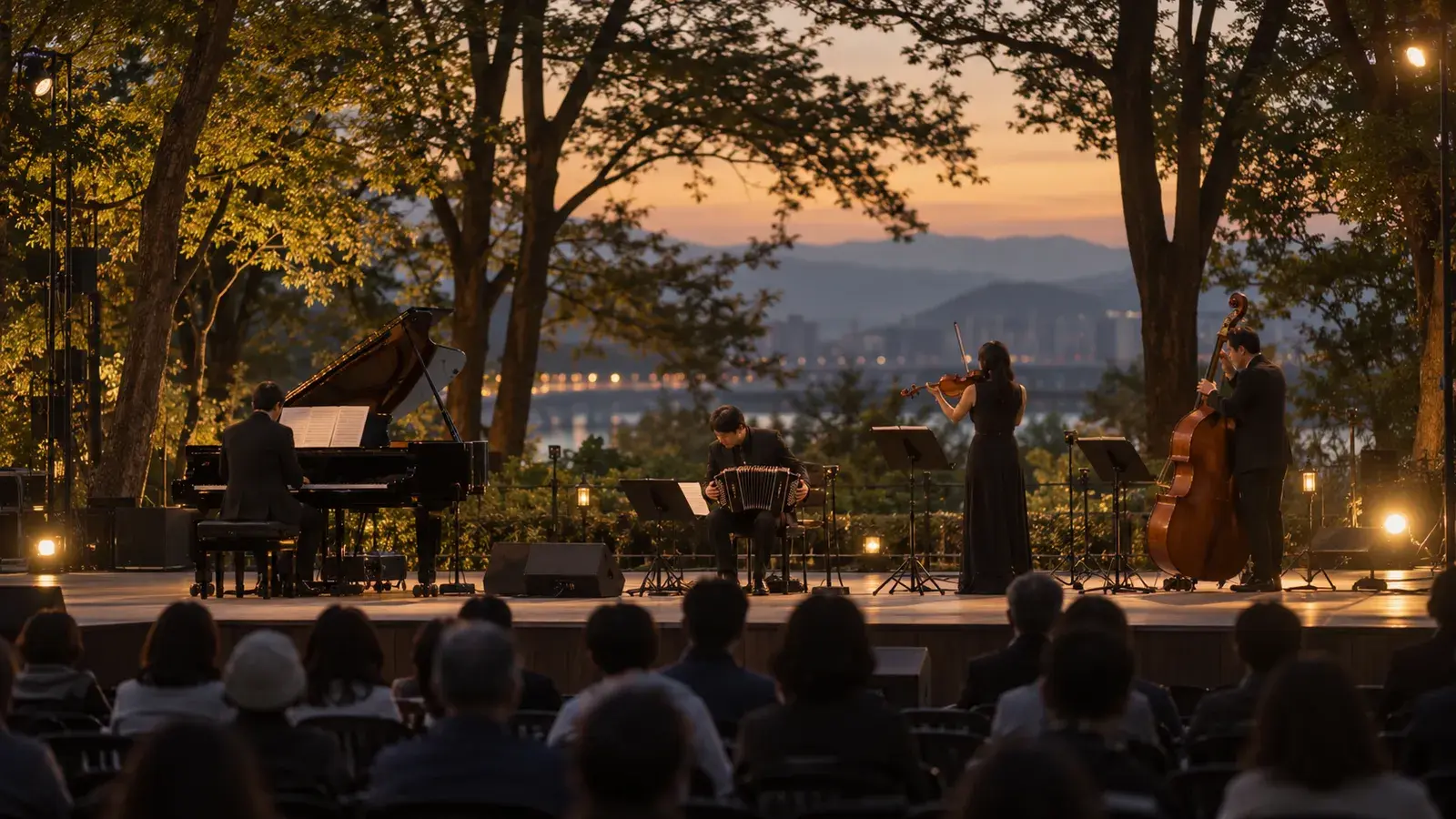
Classical, jazz & tango
Classical music meets accessible jazz and tango for a welcoming atmosphere. You do not need to choose just one genre: we combine repertoire and musicians around the mood you have in mind.
- When you want this mood
- Relaxed music to enjoy together
- What we decide together
- The balance of genres, whether conversation or listening takes priority, and performance duration
Musical theatre gala
A performance built around familiar musical theatre numbers and vocals. We discuss repertoire, performers and accompaniment to suit the purpose and budget of your event.
- When you want this mood
- A stage centred on songs and stories
- What we decide together
- The mood of the songs, performers and accompaniment, and microphone and sound requirements
Lecture concert
A concert combining classical music with commentary and stories. We bring the music and explanations together so that even listeners new to classical music can enjoy the performance throughout.
- When you want this mood
- Employee cultural programmes, public cultural talks and an introduction to classical music
- What we decide together
- The subject of the commentary, presenter, audience and performance duration
The enquiry form opens with this programme already selected. You can change it there.
Ensembles
If choosing an ensemble feels difficult, we can help make that decision
The same budget buys a different ensemble depending on the size of the room, its reverberation and the number of seats. These are the ones most often chosen.
Piano solo
1 playerPiano
A performance by a single pianist. In lecture concerts the pianist often plays and presents the commentary at the same time, and the format also suits smaller venues and background music.
Piano trio
3 playersPiano · violin · cello
The most widely used chamber combination. The piano holds the centre while the strings carry the line, giving a wide range of volume and colour — equally at home as reception music or as a performance in its own right.
String quartet
4 players2 violins · viola · cello
The foundation of chamber music and the most formal of the small ensembles. It needs no piano, which makes it dependable for public ceremonies and outdoor occasions.
Piano quintet
5 playersPiano · 2 violins · viola · cello
Adding piano to the string quartet widens both the volume and the palette considerably. The choice when the audience is over two hundred or the hall has a long reverberation.
Small ensemble
2–6 playersDuo, trio, or mixed winds and strings
Instruments combined to suit the room, the budget and the occasion. Winds such as flute or clarinet brighten the colour; a string-led group keeps it quieter and more reflective.
With voice
Varies with the ensembleInstrumental ensemble or piano with soprano, tenor or baritone
Words carry further than instruments alone. Where there are speeches or a clear theme to the occasion, sung text delivers the message directly.
Orchestra (orchestral collaboration)
Scaled to the occasionChamber orchestra and larger
For large official occasions and anniversaries. Stage size, sound and rehearsal scheduling all have to be designed together, so please contact us three months before the event.
Not sure which programme suits your event?
Tell us the purpose of the event, who will attend and where music fits in the running order. We consider the programme and instrumentation together. Repertoire, performers, technical requirements and the quotation are confirmed after consultation.
Discuss programme options